Understanding the Basics of Cotton, Polyester, and Blend Fabrics
Choosing fabrics for baby clothes often involves deciding between cotton, polyester, and blends. Cotton is cherished for its natural softness and breathability, while polyester provides durability and wrinkle resistance. Blended fabrics aim to combine these benefits, offering both comfort and resilience. Grasping these key characteristics helps in making an informed choice.
The Advantages and Disadvantages of Cotton
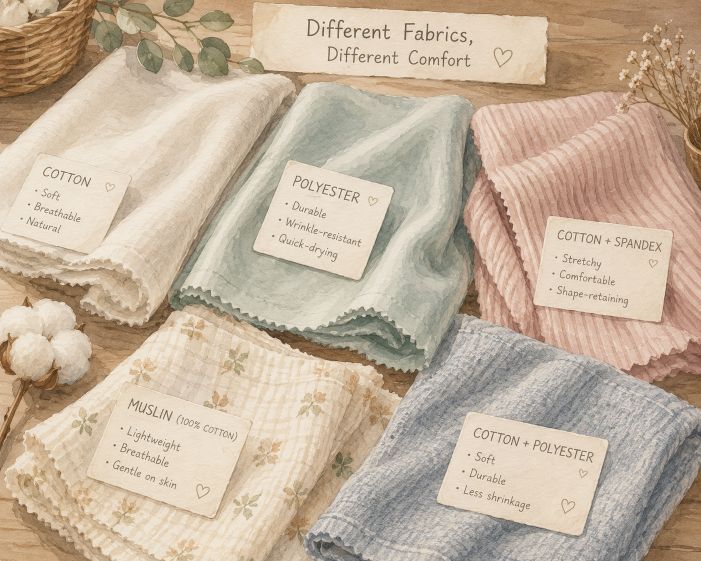
Cotton, a natural fiber used for centuries, is favored for its softness and breathability, essential for a baby’s sensitive skin. Its absorbency helps keep babies cool, and being hypoallergenic makes it less likely to irritate, important for infants with eczema. However, cotton wrinkles easily, can shrink in high-temperature washes, and may not be as durable as synthetic fibers. Despite these drawbacks, cotton’s comfort and safety make it a top choice for parents.
Unpacking the Role of Polyester in Baby Clothing
Polyester is a synthetic fiber celebrated for its durability, wrinkle resistance, and shape retention, even after many washes. Its quick-drying nature is practical for parents managing spills and frequent laundry, making it ideal for active toddlers. However, polyester’s lack of breathability can be uncomfortable in hot weather, and it may irritate sensitive skin. Additionally, its production is less eco-friendly than natural fibers. Despite these drawbacks, polyester’s durability and practicality keep it a staple in children’s wardrobes.
Exploring the Benefits of Blended Fabrics
Blended fabrics, like those combining cotton and polyester, leverage both materials’ strengths. By merging polyester’s durability with cotton’s softness, these blends offer a comfortable and long-lasting choice for baby clothes. A typical 65% polyester and 35% cotton blend is more wrinkle-resistant than pure cotton while retaining breathability. Blends are often more affordable, appealing to budget-conscious parents. However, benefits vary with the blend ratio, so parents should consider their needs when choosing fabrics.
Making the Right Choice for Your Baby’s Clothing
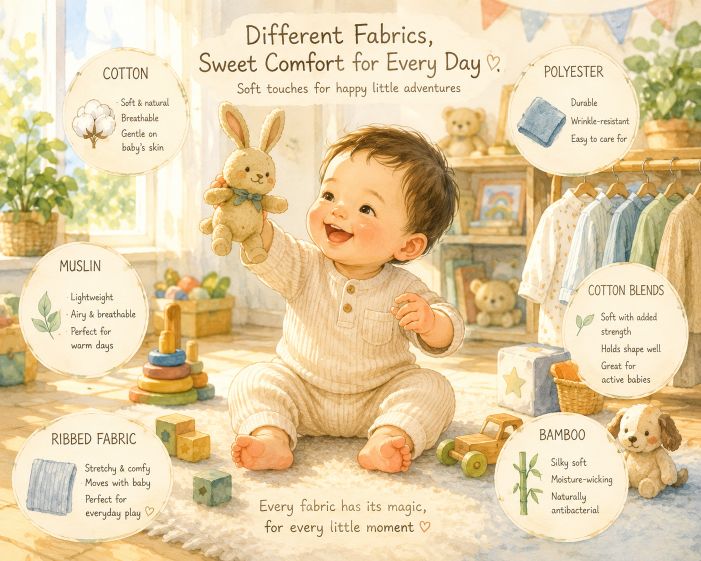
Choosing the right fabric for baby clothes involves balancing comfort, practicality, and budget. Cotton is ideal for those who prioritize natural materials and have a higher budget, while polyester suits those needing durable, easy-care clothing. Blended fabrics offer a mix of benefits from both. The choice also depends on factors like climate, skin sensitivity, and lifestyle. In warmer climates, cotton’s breathability might be preferable, whereas active toddlers might benefit from the durability of polyester or blends. Understanding these factors helps parents make informed decisions for their child’s comfort and health.
When considering fabric choices for your little one, it’s worth exploring brands that offer a range of options, such as those providing high-quality blends that combine the best attributes of cotton and polyester. These blends can offer a practical solution for parents looking to balance comfort, durability, and cost.
Frequently Asked Questions
What are the most breathable fabrics for baby clothes?
Cotton and linen are among the most breathable fabrics, making them ideal for warmer climates or summer wear. They allow air to circulate and help keep the baby cool and comfortable.
How do I care for blended fabric baby clothes?
Blended fabrics typically require gentle washing in cool or warm water to prevent shrinkage. Use a mild detergent and avoid high heat during drying to maintain their quality.
Are there environmental considerations when choosing baby clothing fabrics?
Yes, natural fibers like cotton are generally more eco-friendly, especially if organic. Polyester production is energy-intensive and less sustainable, but choosing recycled polyester can mitigate some environmental impact.