
Understanding Different Methods for Customizing Baby Clothes
When it comes to personalizing baby clothes, parents have a variety of options to choose from, each offering unique advantages. Whether you’re looking to add a special touch to a onesie or create a memorable gift, understanding the different methods for applying custom patterns is essential. In this guide, we will explore four popular techniques: embroidery, heat transfer, screen printing, and sublimation. Each method varies in terms of complexity, cost, and suitability for different fabric types. By the end of this article, you’ll have a clearer idea of which method might be right for your project.
Embroidery: A Touch of Elegance
Embroidery is a classic method for adding intricate designs to fabric. This technique involves stitching thread directly onto the garment, creating a durable and sophisticated look. Embroidery is often chosen for its high-quality finish and ability to add a textured, three-dimensional effect. It’s particularly popular for adding monograms or small images to baby clothes. While embroidery can be done on most fabrics, it works exceptionally well with cotton due to its sturdiness and ability to hold the thread. However, the process requires a degree of skill and the use of specialized equipment, which might be a consideration for those attempting it at home.
Heat Transfer: Simple and Versatile
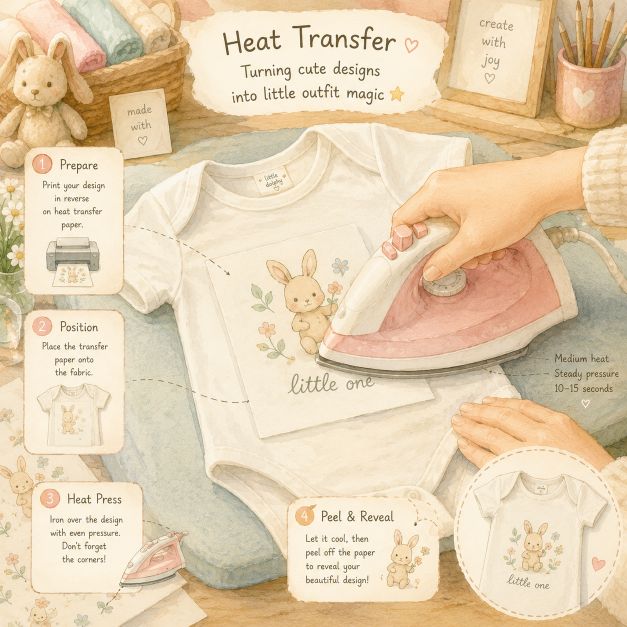
For those seeking a straightforward and cost-effective way to customize baby clothes, heat transfer is an excellent option. This method involves printing a design onto special transfer paper, which is then applied to the fabric using heat. The process is simple enough to be done with a basic iron at home, making it accessible for parents who enjoy DIY projects. Heat transfer works well on cotton and polyester, though it’s important to follow instructions carefully to ensure the design adheres properly and lasts through multiple washes. This method is ideal for creating vibrant, full-color images and is often used for large batches due to its efficiency.
Screen Printing: Ideal for Bulk Customization
Screen printing is a popular choice for producing large quantities of customized apparel. This technique involves creating a stencil of the design and using it to apply ink onto the fabric. The result is a bold and durable print that can withstand frequent washing. Screen printing is particularly advantageous when you need to reproduce the same design multiple times, making it a cost-effective solution for businesses or larger events. It works well on both cotton and polyester fabrics, although the initial setup can be labor-intensive. For parents interested in producing a series of matching outfits or gifts, screen printing offers efficiency and consistency.
Sublimation: Perfect for Polyester
Sublimation is a unique method that involves transferring dye directly into the fabric, resulting in a seamless and vibrant design. This technique is ideal for polyester garments, as the dye bonds with the fibers to create a permanent print. Sublimation is perfect for producing detailed, full-color images without the risk of fading or cracking. However, it requires specialized equipment, making it less accessible for at-home customization. For those who want to create professional-grade designs with a high level of detail, sublimation offers unparalleled quality and durability.
Choosing the Right Method for Your Needs
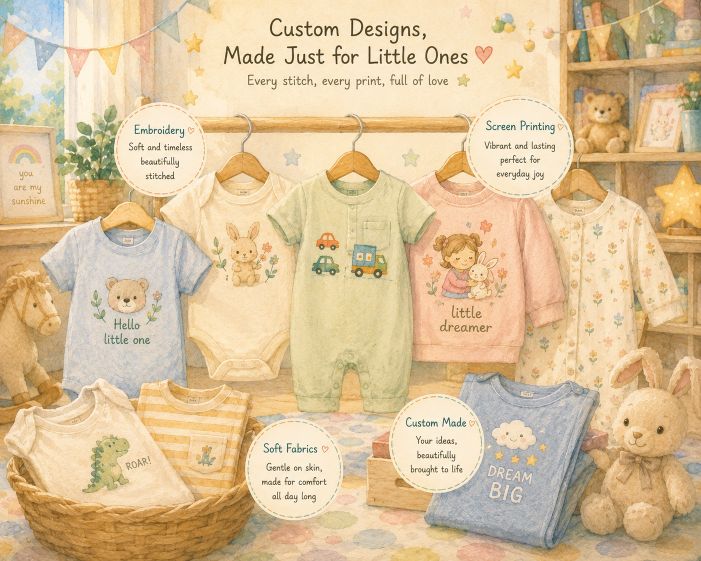
When deciding on the best method to customize your baby’s clothes, consider the fabric type, the complexity of the design, and your budget. Embroidery offers an elegant finish for simple designs on cotton, while heat transfer provides a DIY-friendly option for vibrant images. Screen printing is perfect for bulk orders, and sublimation delivers top-tier quality for polyester. By understanding the nuances of each method, you can select the one that best aligns with your project goals and personal preferences.
For parents seeking high-quality options for customizing baby clothes, exploring the diverse range of products designed for personalization can be rewarding. Consider products that offer compatibility with various customization methods, ensuring you can create the perfect custom look with ease and confidence.
Ready to start your customization journey? Explore the methods discussed above and choose the one that best suits your needs. Whether you’re crafting a special gift or expressing your baby’s unique style, the right technique will help bring your vision to life.
Frequently Asked Questions
Can I use these methods on any type of fabric?
While most methods can be adapted for different fabrics, each has its ideal material. Embroidery works best on cotton, heat transfer is suitable for both cotton and polyester, screen printing is versatile across various fabrics, and sublimation is perfect for polyester.
What is the most durable method for baby clothes?
Embroidery is often considered the most durable, as the design is stitched directly into the fabric. However, screen printing and sublimation also offer excellent durability, especially for frequent washing.
Is it possible to do screen printing at home?
Yes, it is possible to do screen printing at home, but it requires a bit more setup and materials compared to other methods. You’ll need a screen, stencil, ink, and a space to work in, but it can be a rewarding DIY project.
How can I ensure my custom designs last on the fabric?
To ensure longevity, always follow care instructions specific to the customization method used. For example, wash embroidered items gently and use cold water for heat-transferred designs. Avoid high heat in drying to prevent damage.